
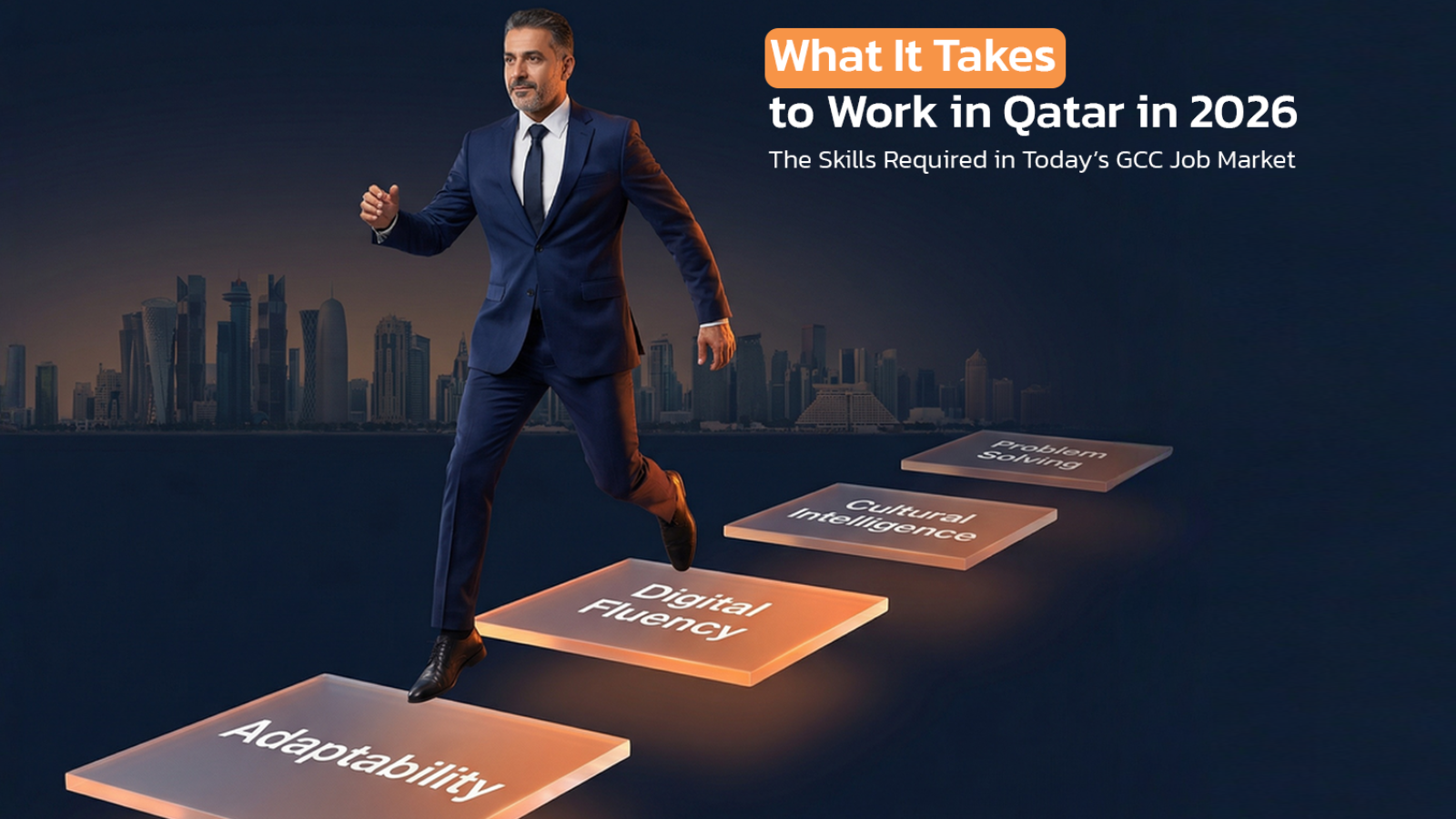
Top Skills You Need to Succeed in Qatar and the GCC Workplace in 2026
The way people work in the Gulf Cooperation Council (GCC) has changed significantly — and in 2026, success in this region requires far more than technical expertise or years of experience.
With increasingly diverse workplaces, accelerated digital transformation, and evolving leadership expectations, professionals working in Qatar, the UAE, Saudi Arabia, and across the GCC must develop a new mix of skills to stay competitive. Employers are no longer hiring based solely on job titles they are hiring for mindset, adaptability, and cultural intelligence.
This article explores the most important skills needed to work in Qatar and the GCC in 2026, with a specific focus on what makes Qatar’s work environment unique.
Why Skills Matter More Than Ever in the GCC Job Market
The GCC job market in 2026 is shaped by:
- Multinational teams
- Cross-border collaboration
- Rapid digital transformation
- Long-term national strategies such as Qatar National Vision 2030
As a result, organizations are increasingly shifting toward skills-based hiring, prioritizing how professionals think, adapt, and collaborate.
According to regional hiring analyses, the most in-demand skills across GCC markets are no longer purely technical, but a blend of human, analytical, and digital capabilities. This shift is clearly outlined in recent research on in-demand skills for GCC hiring, which highlights adaptability, communication, and problem-solving as top priorities in 2026.
1. Cross-Cultural Communication & Emotional Intelligence
The GCC has one of the most diverse workforces globally. In Qatar, teams often include professionals from Europe, Asia, Africa, and the Middle East working together in fast-paced environments.
This makes cross-cultural communication and emotional intelligence essential.
Professionals who succeed in Qatar demonstrate:
- Awareness of cultural differences
- Respectful and adaptable communication styles
- Emotional intelligence when managing relationships
- The ability to collaborate across nationalities
Understanding workplace culture in Qatar and the wider Gulf region plays a critical role in professional success, especially when navigating hierarchy, communication norms, and relationship-driven business environments.
2. Digital Fluency & Technology Awareness
Digital transformation across the GCC has accelerated rapidly, making digital fluency a core requirement even for non-technical roles.
In 2026, professionals are expected to:
- Work confidently with digital tools and platforms
- Adapt to automation and AI-supported workflows
- Understand data-driven decision making
- Learn new technologies quickly
Workforce predictions for the GCC show that companies increasingly favor talent that combines digital awareness with business understanding, rather than narrow technical expertise alone.
3. Problem-Solving & Critical Thinking
Employers across Qatar and the GCC now assess candidates using scenario-based interviews and real-world problem discussions.
These assessments are designed to understand:
- How candidates analyze complex situations
- How they prioritize under pressure
- How they communicate decisions and outcomes
In growing and transforming markets like Qatar, professionals who can think critically and offer structured solutions are seen as long-term assets rather than short-term hires.
4. Adaptability & Resilience
Change is constant in the GCC workplace.
From evolving regulations and economic shifts to new work models and performance expectations, professionals must demonstrate resilience and adaptability to succeed.
Highly valued traits include:
- Openness to feedback
- Willingness to reskill and learn continuously
- Comfort with ambiguity
- Emotional resilience during change
In 2026, adaptability is no longer optional it’s essential.
What Makes Qatar’s Workplace Unique
While many workforce trends overlap across the GCC, Qatar has specific characteristics professionals must understand.
A. Alignment with Qatar National Vision 2030
Qatar’s development strategy emphasizes human capital, innovation, and sustainable growth. Professionals who align their work ethic and mindset with this vision are more attractive to employers seeking long-term contributors.
B. Multinational Teams with Local Context
Qatar blends international business practices with strong local values. Understanding professional etiquette, respect for hierarchy, and cultural sensitivity is key to building trust and credibility in the workplace.
While English is widely used, Arabic language skills and cultural awareness can significantly enhance career opportunities.
C. Relationship-Driven Professional Culture
In Qatar, professional growth often depends on trust and long-term relationships. While technical skills open doors, relationships sustain careers.
How Professionals Can Build These Skills
To succeed in Qatar and the GCC in 2026, professionals should:
- Invest in communication and interpersonal development
- Build digital confidence through continuous learning
- Practice structured problem-solving
- Seek mentorship and feedback
- Understand regional business culture
Careers in the GCC reward those who combine skills, mindset, and cultural awareness.
What Employers Are Looking for in 2026
Organizations hiring in Qatar increasingly focus on:
- Skills-based assessments
- Cultural and behavioral fit
- Long-term potential
- Leadership mindset at all levels
Hiring decisions are no longer transactional they are strategic.
Conclusion
In 2026, success in the Qatar and GCC job market depends on more than qualifications or experience. Professionals who develop cross-cultural communication, digital fluency, adaptability, and problem-solving skills will stand out in an increasingly competitive and diverse environment.
Whether you are planning to work in Qatar, grow your career in the GCC, or adapt to a changing workplace, focusing on the right skills is the key to long-term success.
At DotLynx, we support professionals and organizations in navigating these evolving expectations helping talent and businesses align for sustainable growth.
